Blog / June 26, 2026
How to Name a Wine Without Getting It Rejected
The TTB won’t judge whether your name is funny or tasteful — but it will reject a name that misleads or breaks a specific rule.
By Zillah Bahar, Founder, COLAClear · June 26, 2026
A wine can be called almost anything — Cheap Ass Wine and Booty Call both cleared federal review. Crude or silly is not the problem. Names get rejected for a short, predictable list of reasons, and every one is avoidable.
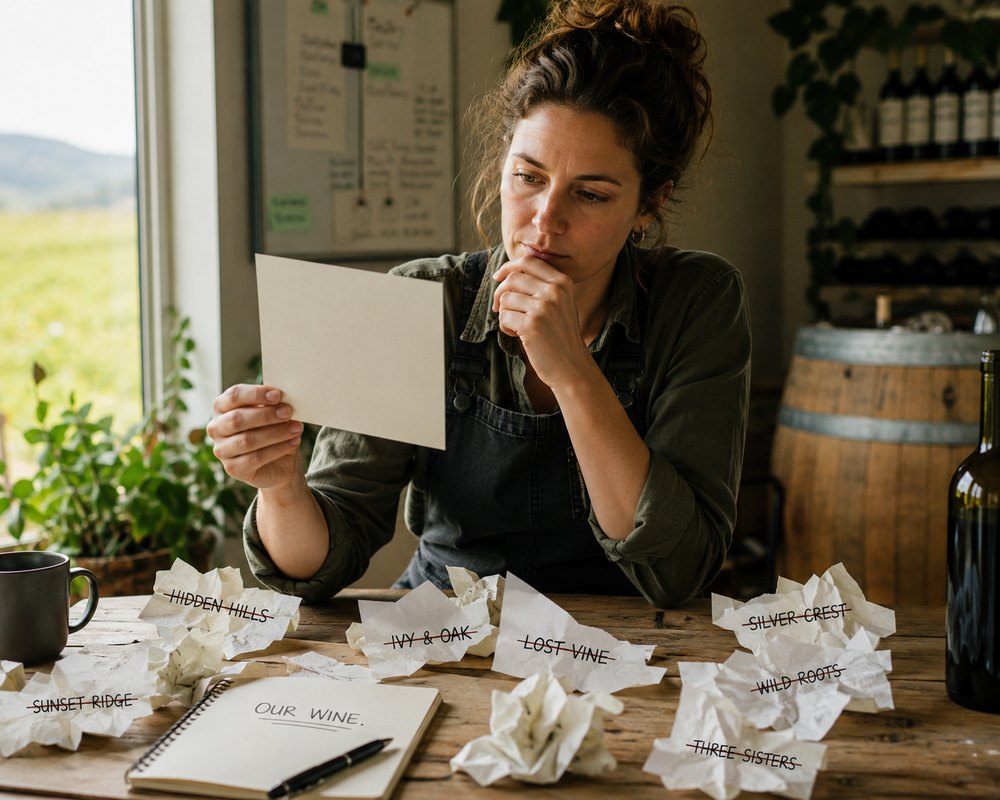
What gets a name rejected
Every wine must carry a brand name (27 CFR 4.33), and it cannot create a misleading impression about the wine’s age, origin, identity, or other characteristics. On top of that, 27 CFR 4.39 lists prohibited practices that apply to the name. In practice, names fail for these reasons:
- Geographic names you don’t qualify for — the most common trap. If your name uses a place with wine meaning (an AVA, a county, a country, or a term like Champagne, Napa, or Tuscany), you can use it only if the wine qualifies for that appellation: generally 85% of the grapes from a named AVA, 75% for a county or state (27 CFR 4.25). “Sonoma Ridge” on a wine that isn’t from Sonoma gets bounced, unless it’s a grandfathered name the TTB has already cleared. Meet the sourcing rule or change the name.
- Claims about age, origin, or quality you can’t back up. Anything that implies a pedigree the wine doesn’t have. Qualify it or drop it.
- Health or therapeutic claims. Clean, detox, immunity, healthy — curative or good-for-you implications are effectively barred, and a brand name can’t carry the substantiation and disclaimers a health statement would require. Cut them.
- Disparaging a competitor or category. Cut it.
- Actual obscenity. The bar is genuine obscenity or indecency — not crude or cheeky, which is why blunt, jokey names get through. Only rework a name if it crosses that line.
Two things people assume — wrongly
- A trademark or prior use does not protect your name, and a COLA is not a trademark. Clearing one does not clear the other — here’s how a winery that got to market first still lost the name.
- Planning to say “Estate Bottled”? That term is tightly restricted under 27 CFR 4.26 — the appellation must be an AVA, your winery must be in that AVA, 100% of the grapes must come from land you own or control inside it, and you must crush, ferment, finish, age, and bottle on your own premises in a continuous process. If you can’t meet all of those, leave it off.
Where COLAClear fits
A pre-screen flags a geographically loaded name or a health-claim word before you file — the difference between catching it at your desk and catching it after a rejection. You can run a label free during beta at colaclear.com.
Zillah Bahar is the founder of COLAClear, a TTB label pre-screening platform for wine, spirits, and beer. COLAClear checks the parts of the label the TTB does — so the only hard call left is what to name the thing.
Sources: 27 CFR 4.33 (brand names), 27 CFR 4.39 (prohibited practices), 27 CFR 4.25 (appellations of origin), and 27 CFR 4.26 (estate bottled). This article is general information, not legal advice — confirm current requirements against the CFR before labeling or filing.
Related reading: The funniest wine names on file with the feds — what clears when the name is the only creative call. See also 7 reasons TTB issues a “Needs Correction” notice. Once the name clears the feds, a second audience decides whether anyone finds it: why AI names some wineries and ignores others, on GetDiscoverable.io.