Blog / June 23, 2026
COLA vs. Trademark: Why an Approved TTB Label Won’t Protect Your Brand Name
An approved COLA clears your label. It does not protect your brand name — and how you launch can cost you the trademark entirely.
By Zillah Bahar, Founder, COLAClear · June 23, 2026
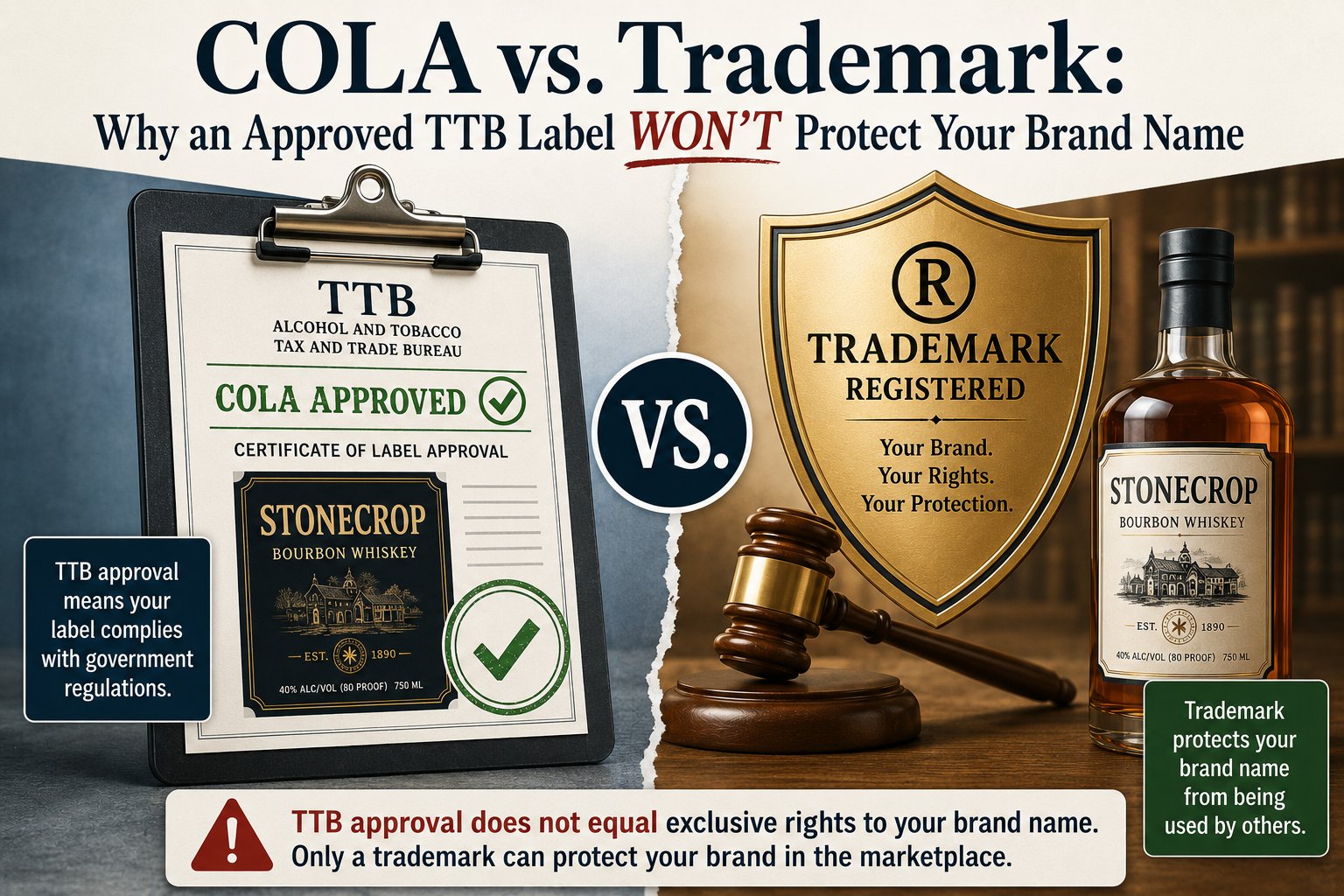
The approval email arrives. Your Certificate of Label Approval (COLA) is issued, your new red blend is cleared for bottling, and the brand feels safe.
It isn’t. An approved COLA does not protect your brand name, and the way you launch can sometimes cost you the trademark entirely. It’s one of the most expensive misunderstandings in the wine business.
Two systems that don’t talk to each other
Federal wine branding runs on two separate tracks.
The TTB reviews your label for consumer protection and mandatory disclosure: class and type, alcohol content, net contents, the health warning, sulfite declarations, and appellation rules.
The USPTO handles brand ownership: who has the right to a name, and whether a new mark is likely to be confused with one that already exists.
The TTB does not check the trademark register. It will approve a label whether or not someone else already owns the name on it. Say you launch a wine called “Stonecrop” (invented here for illustration). If every mandatory element is correct, the TTB issues the COLA, even if another winery already registered “Stonecrop.” The moment your bottle hits the shelf, that winery’s lawyers, not the USPTO, send the cease-and-desist.
Geography works the same way. Under 27 CFR 4.25(e)(3), a wine carrying the Napa Valley appellation must be made from at least 85% grapes grown in that AVA. The TTB checks your sourcing, not who owns the name. Meet the 85% and your COLA clears, but if someone else holds the brand trademark, you still can’t sell under it.
The trap that costs producers their name
Here’s the part that surprises people. To hold a federal trademark, you need “use in commerce,” and that use must be lawful. Selling wine before your COLA issues is not lawful under the FAA Act, so those early sales don’t count toward your rights.
In Tassel Ridge Winery v. WoodMill Winery, both wineries used “Red, White, and Blue.” WoodMill sold first, in July 2006, but its COLA didn’t issue until that October. The court ruled WoodMill’s pre-COLA sales weren’t lawful use, so they couldn’t establish priority. The winery that sold first lost the priority fight. A 2018 TTAB case, Stawski v. Lawson, reached the same result: a Texas vineyard’s pre-sale activity didn’t count because its COLA came too late, and a California vineyard kept the registration.
The lesson is uncomfortable: getting to market early can hurt you if you beat your own COLA there.
What to do
Clear your name with trademark counsel before you commit to it. And don’t sell a single bottle before your COLA is in hand. Your first lawful sale is the one that starts building your trademark rights.
COLAClear screens your label against federal requirements before you file, so your first sale is genuinely lawful and your compliance timeline doesn’t drift behind your branding timeline. It won’t tell you whether a name is taken, but it makes sure the label underneath that name holds up.
Make your first sale a lawful one.
Pre-check your label against the federal requirements before you file, so your COLA clears and your trademark clock starts clean.
Pre-check your label free →Zillah Bahar is the founder of COLAClear, a TTB label pre-screening platform for wine, spirits, and beer. This article is general information, not legal advice.
References
1. TTB does not grant or verify trademark rights. A COLA covers labeling compliance, not brand ownership. See the TTB’s labeling resources and Form 5100.31.
2. AVA appellations require at least 85% of grapes from the named area. See 27 CFR 4.25(e)(3)(ii).
3. Sales before an approved COLA are not lawful use in commerce and cannot establish trademark priority. See Tassel Ridge Winery, LLC v. WoodMill Winery, Inc., No. 5:11-cv-00066-RLV-DSC, 2013 WL 5567505 (W.D.N.C. Oct. 9, 2013); and Stawski v. Lawson, 129 USPQ2d 1036 (TTAB 2018) (Concurrent Use No. 94002621, Dec. 21, 2018).
Related reading: When you need a lawyer for your label (and when you don’t) — where a human earns the fee. See also the two layers of label clearance. Protecting the name is step one; getting an AI to say it back is step two: why AI names some wineries and ignores others, on GetDiscoverable.io.