Blog / July 8, 2026
How to Label a Multi-Varietal Blend
Name two grapes and you’ve triggered a specific set of rules: name them all, show the percentages, and back it with an appellation.
By Zillah Bahar, Founder, COLAClear · July 8, 2026
Putting a grape variety on the label — one grape or several — is a regulated claim, not a marketing choice. The rules are mechanical: easy to meet once you know them, easy to fail if you do not. Here is how to label a varietal or a blend so it clears.
What the rules actually say (27 CFR 4.23)
- To name any grape variety, the wine must also carry an appellation of origin. No varietal name without an appellation.
- Single variety: at least 75% of the wine must come from that grape, and that 75% must be grown in the labeled appellation.
- Exception (27 CFR 4.23(c)): Vitis labrusca varieties (Concord, Niagara, etc.) and any variety TTB finds too strongly flavored at 75% can qualify at 51%. If you use that lower threshold, the label must state “contains not less than 51% [variety]” — required only when you are below 75%.
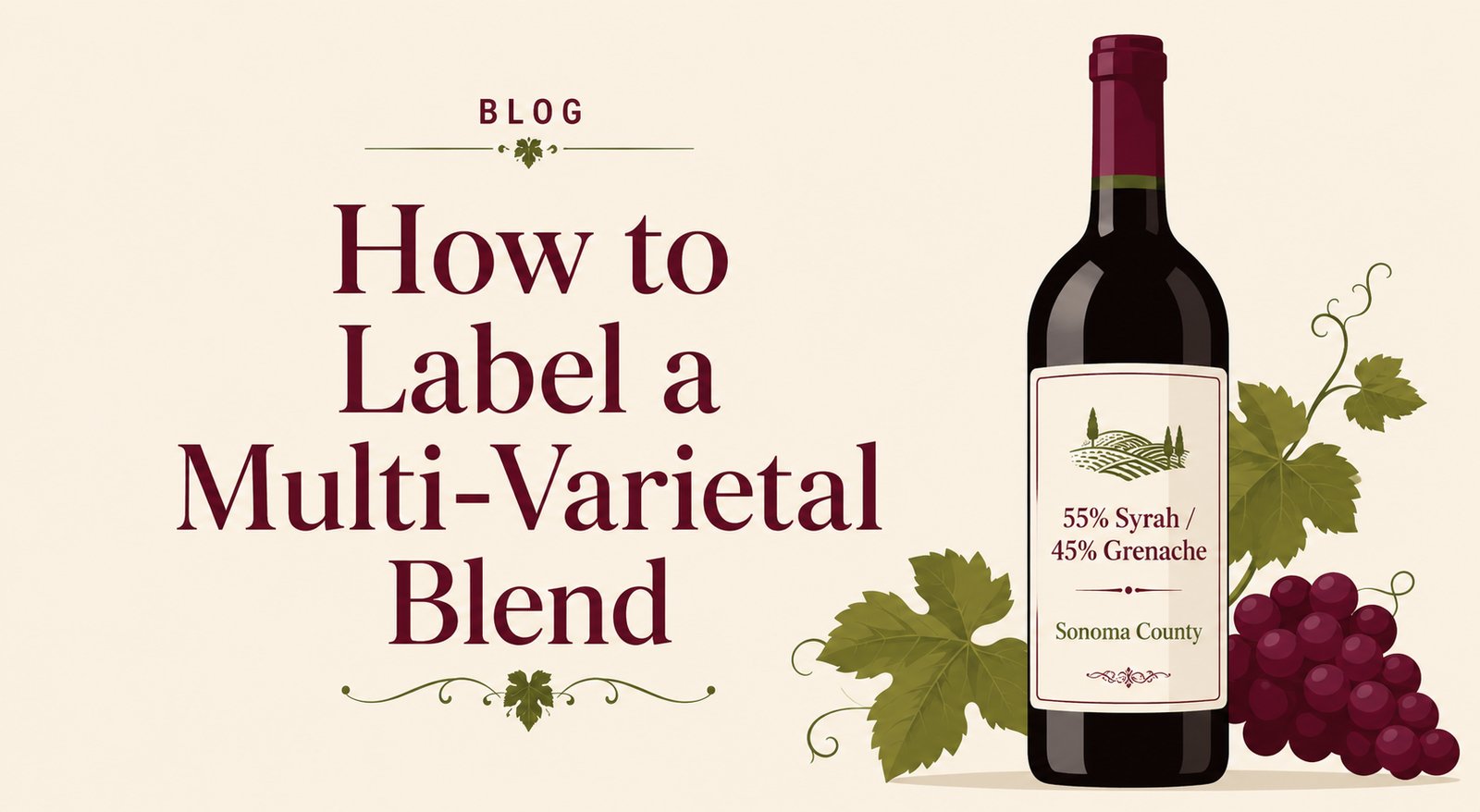
- Two or more varieties: every grape in the wine must be one of the named varieties, and the percentage of each must be shown on the label. TTB allows a tolerance of plus or minus 2%.
The appellation layer (27 CFR 4.25)
A varietal label needs an appellation, and the appellation has its own sourcing rule: at least 85% of the grapes from a named American Viticultural Area (AVA), or 75% for a county or state appellation. So a Napa Valley Cabernet Sauvignon has to clear two bars at once — at least 85% from Napa Valley, and at least 75% Cabernet, with that Cabernet grown in Napa.
Where it goes wrong
- Naming two grapes but printing only one percentage.
- Percentages that do not reconcile within the 2% tolerance.
- A varietal label with no appellation of origin.
- Claiming a single varietal when you are under 75% (without qualifying for the 51% exception and printing its statement).
- Appellation sourcing that does not meet the 85% / 75% threshold.
Where COLAClear fits
A pre-screen checks that your varietals, your percentages, and your appellation all hang together — before the TTB does. You can run a label free during beta at colaclear.com.
Sources: 27 CFR 4.23 (varietal / grape-type labeling, including the 51% exception at 4.23(c) and the ±2% tolerance at 4.23(d)) and 27 CFR 4.25 (appellations of origin). This article is general information, not legal advice — confirm current requirements against the CFR before labeling or filing.
Related reading: How to name a wine without getting it rejected — the geographic and claim traps that catch brand names. See also 7 reasons TTB issues a “Needs Correction” notice.