Blog / June 5, 2026
Bringing Export-Labeled Spirits or Wine to the U.S. Market? The Label Isn’t Ready Yet
A bottle labeled for one country’s rules has to be brought into line with U.S. requirements before it can sell here — here’s exactly what changes.
By Zillah Bahar, Founder, COLAClear · June 5, 2026
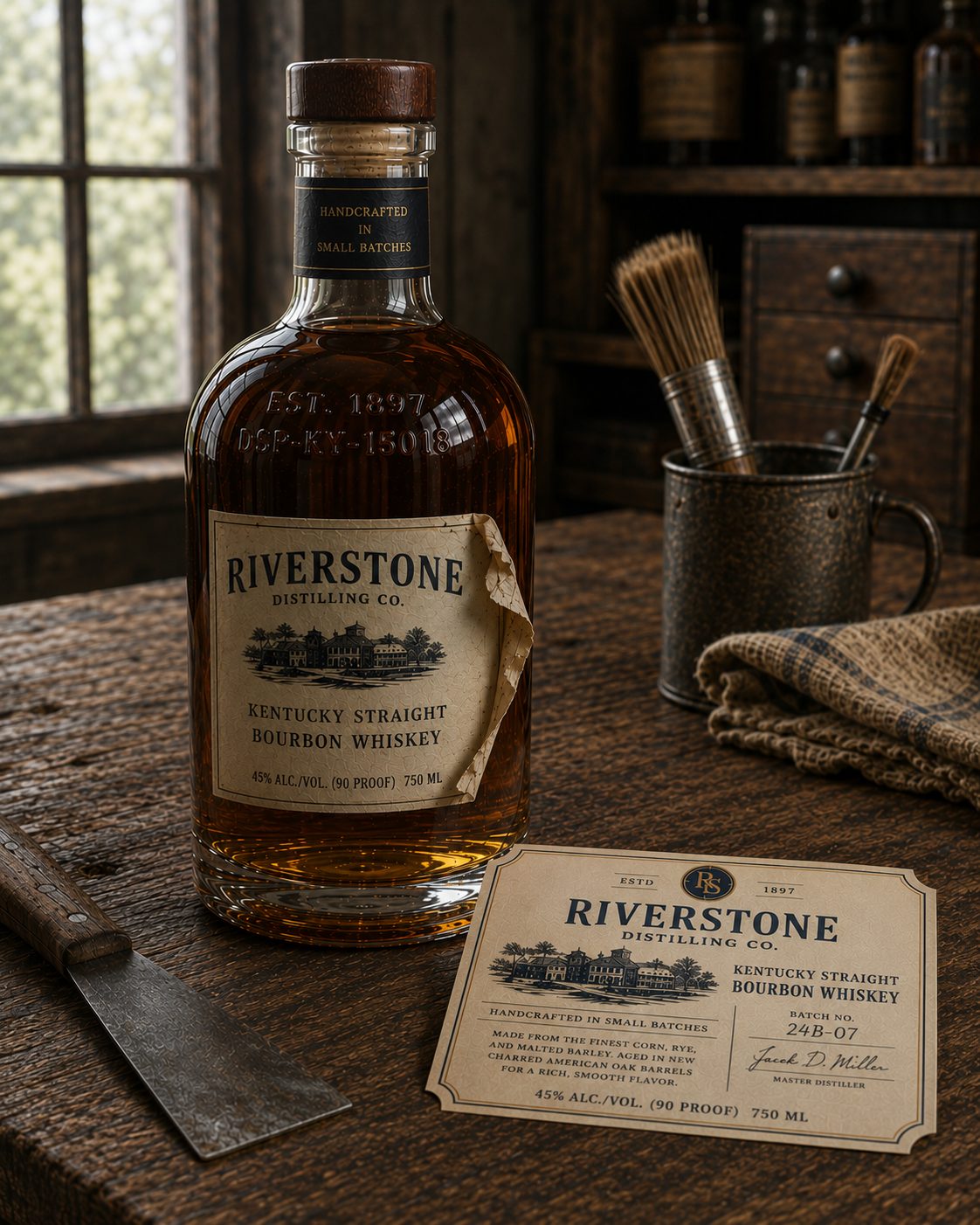
TTB’s June 2026 guidance covers a routine but exacting task: bringing export-labeled product into line for U.S. sale. A bottle labeled for a foreign market isn’t automatically cleared to sell here. Whether it’s your own export stock redirected to the domestic market or product you’re importing, the label has to meet U.S. rules before it goes on a shelf — and here’s exactly what changes.
Per TTB, you can usually modify the label rather than replace it entirely — the work is in knowing precisely what has to change. Here are the points to check.
1. The government health warning — the most common omission
Export bottles usually don’t carry it, because it isn’t required outside the U.S. — which makes it the single most frequent miss. The Surgeon General’s warning is mandatory under 27 CFR Part 16, in its exact wording, with the text fixed in 16.21. It’s not enough to add “a” warning; it has to be the warning, word for word. No warning, no U.S. sale.
2. The standard of fill — the size has to be authorized here
The container size has to match a TTB-authorized standard of fill — 27 CFR 4.72 for wine, 5.203 for distilled spirits. A size that’s perfectly normal in another market may or may not be on TTB’s authorized list, and this one is easy to miss because the bottle looks fine. Check the actual size against the current table, not against what your export market allowed.
3. The responsible-party line — and, for imports, origin
A U.S. label has to name the responsible party with the right qualifying phrase — the bottler or producer for domestic product, or the importer for imported product — under 27 CFR 4.35 and 5.66. If the bottle is being imported rather than relabeled from your own export stock, it also needs an “Imported by” line and a country-of-origin marking (the origin marking is a U.S. Customs requirement, 19 CFR 134.11, and has to be conspicuous). Export labels designed around a foreign producer’s format routinely don’t have these in the form TTB expects.
4. The alcohol content statement
The ABV statement has to meet U.S. format and tolerance rules — 27 CFR 4.36 for wine, 5.65 for spirits — which don’t always line up with how it was printed abroad. For spirits, if proof is shown it has to be consistent with the ABV (proof is twice the percentage of alcohol by volume). It’s a small detail that’s simple to get right and just as simple to overlook on a label built for another market.
New COLA, or an allowable revision?
Depending on what you change, you may need a new Certificate of Label Approval, or your change may fall under TTB’s list of allowable revisions to an existing COLA. Either way, the time to catch a missing warning or a non-authorized fill is before you submit — not after a “Needs Correction” notice sends you back to the start.
All of it is checkable ahead of time: the health-warning wording, the standard of fill, the responsible-party and origin statements, the ABV format. COLAClear runs those checks in seconds, free during beta, at colaclear.com — so an export-to-U.S. relabel doesn’t stall on something avoidable.
An export label isn’t ready for U.S. shelves.
Run a free pre-check to see what TTB will require before you file.
Pre-check your label free →Zillah Bahar is the founder of COLAClear, a TTB label pre-screening platform for wine, spirits, and beer.
Sources: TTB Newsletter, June 2026 · 27 CFR Part 16 and 16.21 (health warning) · 27 CFR 4.72, 5.203 (standards of fill) · 27 CFR 4.35, 5.66 (name and address / importer) · 19 CFR 134.11 (country-of-origin marking, U.S. Customs) · 27 CFR 4.36, 5.65 (alcohol content).
Related reading: What imported wine labels need that domestic ones don’t — the import-specific rules in more depth.