Blog / August 7, 2026
Age Statements on Spirits Labels: When “Time in Oak” Has to Appear
On a spirits label, age isn’t marketing — it’s a defined federal term. Whether you must state it, may state it, or can’t depends entirely on what’s in the bottle.
By Zillah Bahar, Founder, COLAClear · August 7, 2026
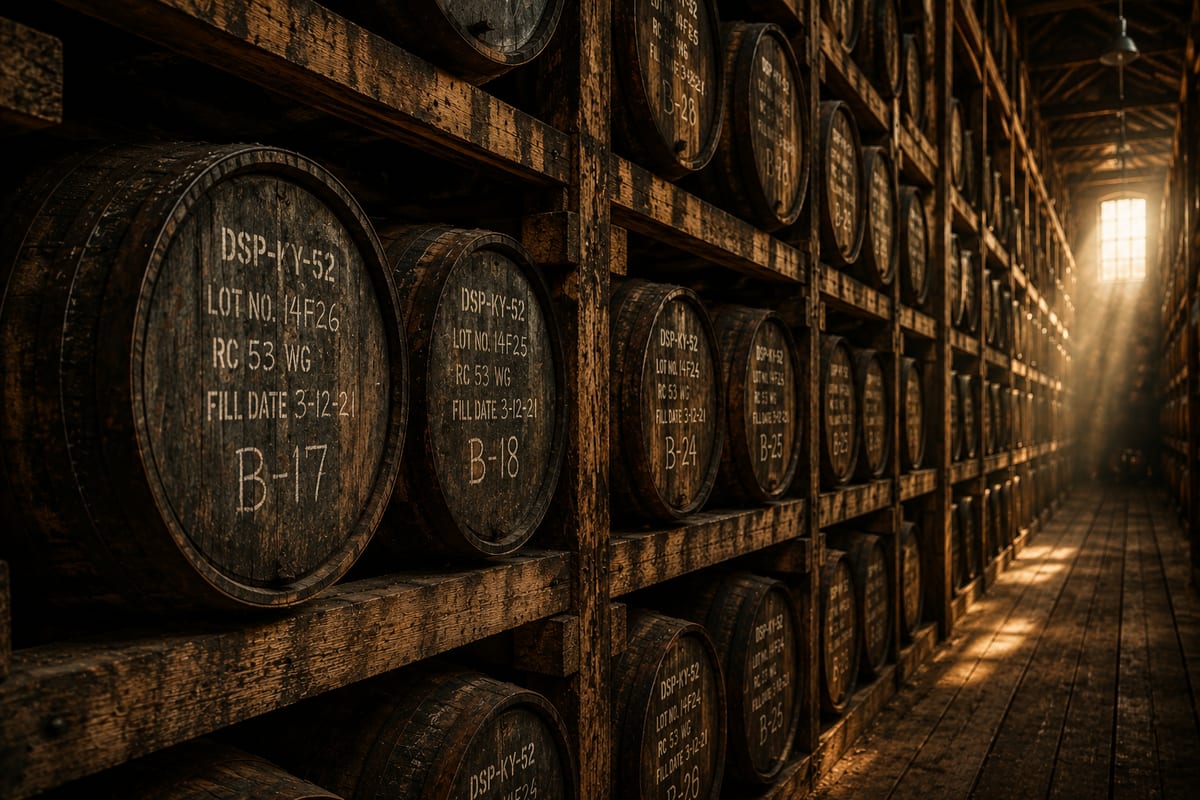
“Age” on a spirits label means one specific thing: the time the spirit spent in oak barrels, after distillation and before bottling (27 CFR 5.74). It’s literally time in oak. And that’s where it trips people up — because for some spirits an age statement is required, for others it’s optional, and for at least one it’s flatly prohibited. Put a product in the wrong bucket and you’re looking at a REVIEW flag — or a reprinted label.
Whisky: the four-year line
This is the rule that catches the most people. Any whisky aged less than four years must carry an age statement — whether or not the word “straight” appears anywhere on it (27 CFR 5.74(b)). The only way out is “bottled in bond,” which by definition already means at least four years.
- Under 4 years → age statement required (state the age of the youngest whisky in the bottle).
- 4 years or more → optional. You can print it; you don’t have to.
- The format is plain: “___ years old.”
This is the “time in oak” trap. A young craft whiskey that proudly leaves the age off — because a number feels less premium — may actually be missing a required statement.
Brandy: the two-year exception
Brandy is optional… with one big catch. A brandy that hasn’t been stored in oak for at least two years must state its age (27 CFR 5.74(c)). Fruit brandies, marc, pomace, Pisco, Singani, and grappa are carved out — they aren’t customarily oak-aged — but an ordinary young grape brandy owes a statement.
Rum, agave, gin, vodka: optional — until it’s forbidden
For rum and agave spirits (tequila, mezcal), age statements are optional. For neutral spirits — vodka, neutral grain spirits — they’re not merely optional, they’re prohibited: you can’t make an age or maturity claim at all (27 CFR 5.74(e)). “Aged vodka” is a contradiction the TTB won’t allow.
“Barrel aged,” “matured,” “oak rested”: the sneaky one
You don’t have to print a number to make an age claim. If your label leans on maturity language — “aged in oak,” “barrel matured” — the TTB treats that as claiming age, and you generally have to back it up with an actual age statement (a real number, in readable type) on the same label (27 CFR 5.74(f)).
The logic: if you’re going to suggest the spirit is well-aged, you have to prove it — otherwise a six-month-old whiskey could imply years in the barrel.
A few things don’t count as an age claim, so they need no number: the word “old” in a brand name (like “Old Grand-Dad”), and general maturity language on whiskies, brandies, rum, or agave spirits that are already at least four years old.
A few rules that apply across the board
- You may understate age; you may never overstate it (27 CFR 5.74(a)).
- The age is the youngest spirit in the blend — not the oldest, not the average.
- Age can be given in years, months, or days.
- A distillation date may appear only if an age statement is also on the label.
Where it trips people up
- A sub-four-year whiskey with no age statement (the most common miss).
- “Aged in oak” on the label with no number behind it.
- A young grape brandy assuming age is always optional.
- Any “aged” or “matured” language on a vodka.
Age statements look like a flourish. They aren’t — they’re a claim about time, and the TTB treats them like one. When the number’s on the label, it has to be true. When it’s required, it has to be there.
Where COLAClear fits
A pre-screen checks age-statement adequacy against 27 CFR 5.74 — flagging an aged spirit that owes a statement and doesn’t carry one, and age language that isn’t allowed. You can run a label free during beta at colaclear.com.
Reference: 27 CFR 5.74 — Statements of age, storage, and percentage. This article is general information, not legal advice — confirm current requirements against the CFR before labeling or filing.
Related reading: How America names its spirits — the class-and-type rules behind the front label. See also what the spirits COLA data reveals.