Blog / May 24, 2026
Eastern European Wine Is the Only US Import Category Growing Right Now
By Zillah Bahar, Founder, COLAClear
US importers filed 1,638 wine labels from 14 Eastern European and Caucasus countries with TTB in 2025. The trade still writes about them as one-offs.
In 2025, US importers filed 1,638 wine labels from 14 Eastern European and Caucasus countries with TTB — all approved. That’s bigger than Chile (1,182) and within ten percent of Argentina (1,669). It’s also the only major import region growing while US wine consumption shrinks — volume fell another 2 percent in 2025, the second straight year of decline, with SVB forecasting more pain through 2027. (Source: TTB Public COLA Registry; SVB 2026 State of the US Wine Industry Report.)
Georgia leads with 391 filings, more than England, Canada, and Switzerland combined, across 149 unique brands. Greece follows at 322, Moldova 193, Hungary 164, Romania 115, Slovenia 99, Armenia 92. Macedonia, Czechia, Croatia, Bulgaria, Serbia, Ukraine, and Albania fill in the block.
This isn’t diaspora demand
Three forces are doing the actual work, and none of them are getting written about as one story.
Russia’s wine ban is now an American story
The 2006 Russian ban on Moldovan and Georgian wines, the 2014 sanctions, and the 2022 invasion of Ukraine systematically cut off what had been 80 to 90 percent of these countries’ export volume. Both rebuilt around the West. The United States is now Moldova’s number-one bottled wine export destination at 33 percent of total exports. (Source: e-International Relations, 2025.) Georgian wine exports to the United States grew 27 percent in volume and 32 percent in value in 2024, capping a 15.5 percent compound annual growth rate from 2021. (Source: National Wine Agency of Georgia.) Neither country is waiting passively. The “Georgia, Naturally” trade campaign ran across the US in 2025.
The growing US wine cohort wants exactly what these regions make
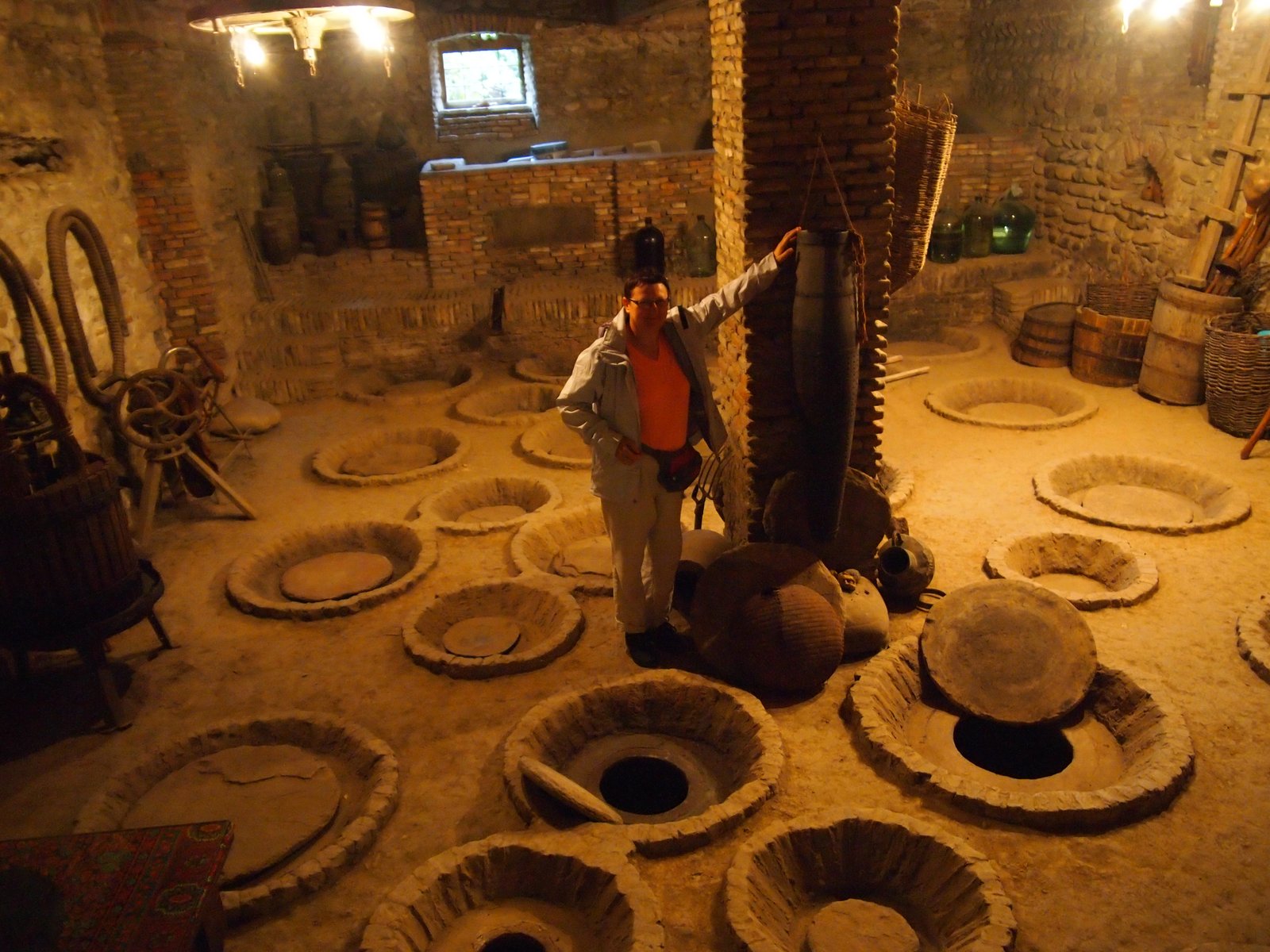
Millennials are now the largest US wine-drinking generation at 31 percent of consumers, ahead of Boomers at 26 percent. Gen Z grew from 9 to 14 percent in two years. (Source: Wine Market Council, 2024.) They drink less, spend more per bottle, gravitate to the $15–25 price band where most Eastern European wines land, and explicitly seek the orange-wine, low-intervention, story-driven categories these regions have built for centuries. Georgia’s UNESCO-listed qvevri tradition is, by accident of history, the natural-wine movement’s origin story.
The discovery channel has built dedicated infrastructure
Orange Glou, the first US subscription service devoted to orange wine, launched in 2019 and now serves customers nationally. Amber Georgia — the first US wine fair devoted to Georgian natural wines — debuted in New York in November 2025. Skin-contact wines from Georgia, Slovenia, and Greece anchor consumer best-of lists that didn’t exist ten years ago. (Sources: Orange Glou; Amber Georgia; VinePair.)
Geography tells you who’s doing the importing
New York is the dominant entry point — top importer state for 8 of 14 countries, including 123 of Georgia’s 391 filings. Exceptions track diaspora precisely. Armenian wine into California (57 of 92 filings — Glendale and Fresno). Balkan wines into Chicago (Macedonia, Croatia, Bulgaria, Serbia). Romanian wine into a West Virginia pocket that almost certainly traces to a single dominant importer.
One caveat: with US tariff policy in flux after the Supreme Court’s February 2026 ruling on IEEPA-based tariffs and ongoing litigation over the replacement Section 122 framework, the relative EU vs. non-EU duty advantage that briefly favored Georgia, Moldova, and Armenia in 2025 is now too uncertain to forecast.
The trade press writes about each country in isolation. The numbers say to read them as a category.
COLAClear pre-screens wine labels — domestic and imported — against the same regulatory framework TTB applies. Free during public beta at colaclear.com.
Related reading: What 13,744 domestic spirits COLAs reveal about how brands actually grow applies the same supply-side lens to US spirits. 22 of the Top 25 U.S. Wine COLA Filers Are Importers covers where the compliance burden actually concentrates.
Sources: TTB Public COLA Registry, 2025 calendar year (48,854 imported wine COLAs, 14 Eastern European and Caucasus countries totaling 1,638). Per-country class/type and importer-state distributions derived from TTB permit prefixes. SVB 2026 State of the US Wine Industry Report. National Wine Agency of Georgia. Wine Market Council, 2024. e-International Relations, 2025. Orange Glou; Amber Georgia 2025; VinePair.